Everything Is Evolving Rapidly- Key Forces Defining Life In 2026/27
Wiki Article
Ten Technology Shifts Driving The Years Ahead And Further
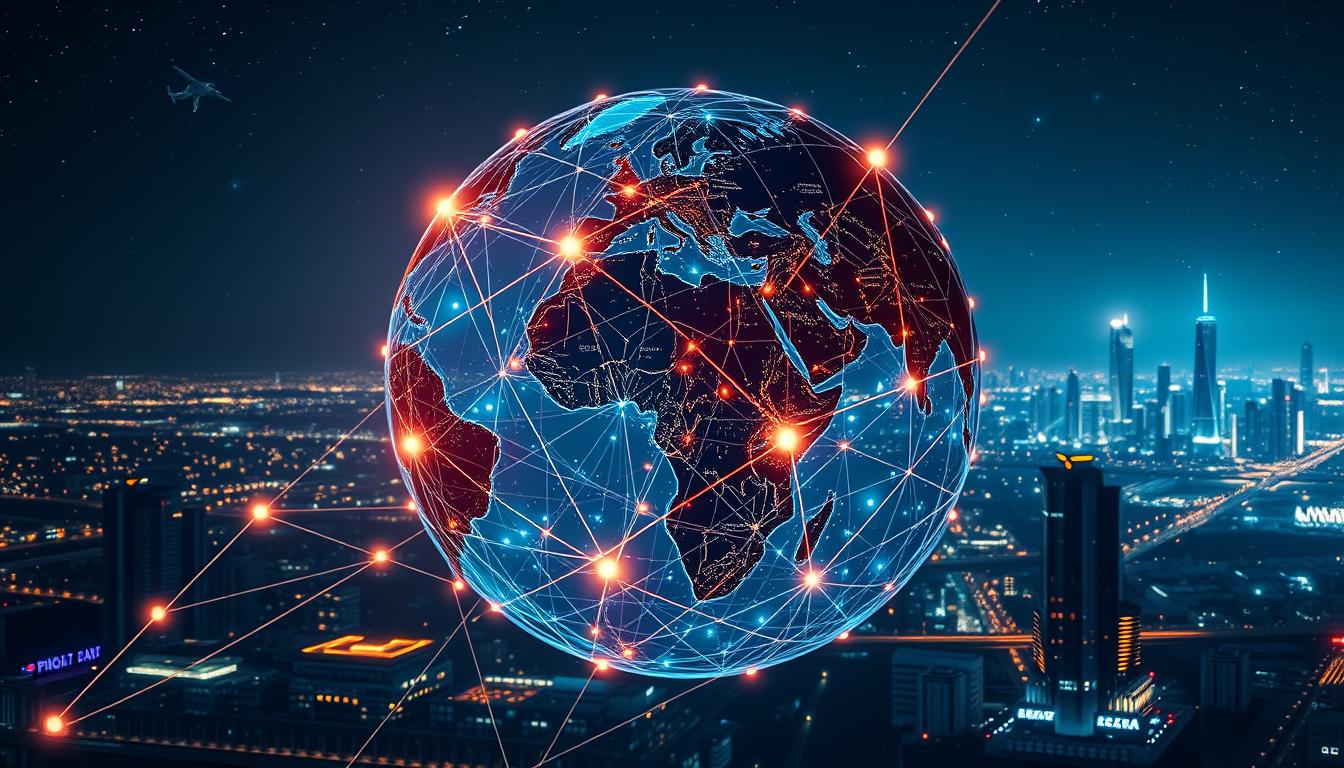
The speed of digital transformation doesn't seem to be slowing down. From how businesses run to how individuals interact with each other and the environment around them The technology industry continues to transform virtually every aspect of modern life. Some of these transformations are in the making for a long time and are now at critical mass, while others have taken off quickly and took entire industries by surprise. If you're in the tech industry or live in a globe that is increasingly shaped and defined by it knowing where technology is going to lead you to an edge. These are the top ten technologies that matter the most through 2026/27 as well as beyond.
1. Artificial Intelligence Moves From Tool to TeammateAI is moving from being just a new technology or shortcut to becoming something more integrated. In all industries, AI systems now operate as active collaborators, not inactive assistants. In software development AI develops and reviews code along with engineers. When it comes to healthcare, it can detect diagnoses that human eyes might not be able to detect. When it comes to content creation, marketing, and legal services, AI does the initial writing and regular analysis so the human experts can concentrate in higher level thinking. The transition is less about replacement and more about defining what humans do when repetitive tasks are handled automatically.
2. The Development Of Agentic AI SystemsBeyond the standard AI assistants Agentic AI is a term used to describe systems capable of planning as well as executing multi-step processes autonomously. Instead of responding to a single command their systems break down complex goals, select the right course of action utilize various tools and data sources, and follow through without constant human input. Businesses will benefit from AI that manage workflows along with conducting research, sending messages, and also update systems in a manner that requires minimal supervision. To everyday users, this refers to digital assistants that actually do the work rather than just answer questions.
3. Quantum Computing Enters Practical TerritoryQuantum computing has been being a figment of theory-based possibilities. But that is changing. Although universal quantum computers are in development in the meantime, specific systems are beginning to provide real benefits for drug discovery, materials science, logistics optimisation and financial modelling. Large tech companies and national government agencies are increasing their investment in new quantum systems, and the competition to be able to reap a real commercial advantage is getting more intense. Companies that are keeping an eye on this will be much better off when the technology matures fully.
4. Spatial Computing As Well As Mixed Reality Expand Their FootprintAfter the launch of commercially available large-scale mixed reality headsets spatial computing is finding practical applications beyond gaming and entertainment. Architecture firms utilize it for immersive design reviews. Surgeons train in complex procedures within virtual environments. Remote teams work together within sharing three-dimensional spaces. As hardware gets lighter and more affordable, the use of spatial computing source is set to be the norm for how digital information is obtained in a variety of ways, as well as acted on both in professional and everyday scenarios.
5. Edge Computing Brings Processing Closer To The SourceCloud computing transformed what was possible because it centralised processing power. Edge computing is now decreasing its centralisation, and for good reason. Through processing the data close to where it is generated, whether in a factory floor or the hospital ward, or inside the vehicle that is connected, edge computing reduces delay, improves reliability and reduces the bandwidth demands of constant cloud communications. In applications where real-time responsive cannot be negotiated, ranging from autonomous vehicles, industrial automation to smart city infrastructure edge computing has become a crucial component.
6. Cybersecurity has evolved into a continuous DisciplineThe threat landscape is growing too quickly and is too complex for the traditional model of regular audits and patching reactively. In 2026/27, serious organizations make cybersecurity a continuous overall discipline rather than an IT department's responsibility. Zero-trust architecture, which posits that no user or system is reliable as a default, is now becoming the norm. AI-powered tools monitor networks real-time, identifying any anomalies prior to them morphing into violations. Humans remain the most exploited vulnerability therefore, security education and culture the same as any technology solution.
7. Hyperautomation Link The Dots Between SystemsHyperautomation uses a combination of AI machine learning and robotic process automation in order to discover and automate workflows as a whole rather than just isolated tasks. Like simple automation it is a look at the connecting tissue between systems which previously required human intervention and eliminates obstruction completely. Companies from banking and the insurance industry through supply chain management and public service sectors are discovering that hyperautomation can not just reduce costs, but fundamentally changes the nature of what an organization can be capable of delivering in a speedy manner.
8. Green Tech And Sustainable Digital InfrastructureThe environmental cost associated with digital infrastructure is under ever-increasing review. Data centers consume huge amounts of electricity. Furthermore, the surge in AI training tasks has driven that usage to be significantly higher. As a result, the industry invests in energy-efficient equipment, renewable powered facilities, coolers that use liquids as well as more effective methods to manage the workload. For companies with ESG commitments, the carbon footprint of their IT stacks not something that is able to be absorbed in the background.
9. The Democratisation Of Software DevelopmentAI-powered, low-code and no-code platforms let software creation be within reach of people with no education in programming. Natural software interfaces, as well as visual development environments let domain experts develop functional applications automated processes, and connect data systems without using outside developers. The pool of people capable of developing digital solutions is expanding rapidly and the consequences for agility in business and creativity are huge.
10. Digital Identity And Data Sovereignty Take Centre StageAs the digital age grows more complex as we move into the digital age, questions about who owns personal information and the method of verifying identity online have become more prominent than secondary concerns. Privacy-preserving technology, and more robust rights for data portability are growing in popularity. In both the public and private sectors, they are pushing toward methods that give users more true control over the use of their digital identities and clearer visibility into what data they are being used. The direction has been set, even though the exact path isn't clear.
These trends are not individual developments. These trends feed and accelerate each other in a digital space that is changing faster than ever before in history. Information isn't just a matter of technologists. In a digital world changed by digital power, it's becoming increasingly relevant for everybody. For additional information, browse these respected digifoorumi.fi/ to learn more.
 Ten Online Social Changes Influencing How We Connect In 2026/27
Social media is now such a part of our daily lives that separating its influence from the wider culture is becoming more difficult. It has an impact on how people form opinions. They also create identities that they follow, consume entertainment, updates, develop relationships as well as engage in public discourse. The platforms themselves continue to grow rapidly, driven by competition, regulation and the constant pressure to grab and hold human attention. What's coming up in 2026/27 is a new social media landscape that is more fragmented increasingly AI-dominated, and influential than at any prior period. Below are the ten most important social media trends that are affecting culture as we enter 2026/27.
1. AI-Generated Content The Floods Every PlatformThe amount of AI-generated content on Social media has risen to an extent that is fundamentally altering the digital landscape. Images, videos and written content, and complete accounts that generate content in high speed are now a standard feature of each major platform. The consequences vary from relatively harmless, AI-assisted authors producing more content with greater efficiency and causing more harm, to the truly destructive artificial misinformation, fabricated persons, and fabricated consensus operating at a scale that human moderation can't keep pace with. The ability to differentiate human-generated from AI-generated content is becoming both a technical challenge as well as a crucial cultural skill.
2. Short-Form Video Remains Dominant But EvolvesShort-form videos established itself as the most popular format for content in today, and it will remain so until 2026/27. What is changing is the sophistication of both the content and the viewers who are watching it. Creators are experimenting with more sophisticated format within the constraint of short-form while audiences are showing more interest in quality material that uses the format with care instead of simply optimizing for just the first three seconds of their attention. Platforms are also experimenting using longer formats and better engagement mechanics as they seek to transcend the scroll and provide the type of persistent time-on -platform that has commercial value.
3. The Creator Economy matures and stratifiesThe creator economy has expanded into a significant sector of economics however the distribution of its rewards is becoming increasingly disproportional. It is true that a relatively small proportion of creators at the top of the market generate substantial income, while the vast middle tier is struggling to convert audience into sustainable revenues. Changes in the algorithm used by platforms, increasing content saturation, and the difficulty of standing out in an environment in which AI can replicate content that is surface-level without cost constantly increasing competition on middle-tier creators. The most resilient business models for creators of 2026/27 are ones that are built around genuine community, a distinctive views, and direct commercialisation models that decrease dependence on the platform's algorithms.
4. Alternative Platforms and Decentralised Platforms Gain GroundIn the wake of disillusionment from centralised platforms, fueled through concerns over algorithmic manipulation security, data privacy, non-conformity in moderation, and concentration of power in just a small number of technology companies, has led to the rise of alternatives to centralised platforms. Federated social networks based on open protocols, niche community platforms catering to specific groups of interest, and models that are based on subscriber support, which align incentives for platforms to user value rather than the needs of advertisers are all seeing audiences. The most popular platforms enjoy enormous potential for growth, however their ecosystems are becoming more diverse.
5. Social Commerce becomes a major shopping ChannelThe integration and integration of eCommerce directly into social media feeds including live streams,, and creator content has led to a shift in shopping habits that is notably evident among the young people. Social commerce, the process of discovering and purchasing items without leaving the site, is growing rapidly across every social channel. Live shopping models, first developed in Asia and now growing globally mix retail and entertainment using methods that yield high performance in terms of conversion and engagement. For brands, the influencer relationship is evolving from awareness marketing into an direct sales channel that comes with the ability to measure revenue attribution.
6. Raw Content and Authenticity Insist Against PolishA direct response to the decades of high-quality, aspirationally curated social media content is giving rise to a craving for rawness the spontaneity of life, as well as visible imperfection. Content creators who are unfiltered that express genuine uncertainty and lives that appear at a human level rather than being aspirationally impossible are seeing engaged audiences that polished content struggle to make it to. It's not a total rejection of quality, but rather an adjustment of what quality means in a context where authenticity is itself becoming a source of competitive advantage. The fact that authenticity in its raw form is able to be constructed as well just like other formats of content can not be ignored by the more self-aware regions of the internet.
7. Mental Health And Platform Design Confront More ScrutinyThe relationship between use of social media in relation to mental health particularly for young people continues to attract significant research, regulatory focus, and public debate. Age verification requirements, screentime tools with transparency obligations for algorithmic algorithms, and limitations on certain recommendations for content are all under consideration or implementation across all major jurisdictions. Platform design choices that exploit vulnerability to psychological factors to improve engagement are attracting scrutiny that is beginning to produce genuine change in the manner that products are built and run. The gap between the information platforms share about the impact of their design decisions and the information they release publicly is a major point of debate.
8. Community And Interest-Based Spaces Grow In ImportanceBecause the broad public Square model in social media in which everybody is sharing their posts with everyone on everything, has shown its weaknesses in terms of violence, toxicity, and noise, smaller and less specific communities are growing in appeal. Subreddits, Discord server Substack communities and private group chats and niche forums based around specific topics or identities are places most people are finding that online connections and interactions they don't expect from the general-purpose platforms. The shift is the result of a bigger appreciation that the scale which powers platforms also creates difficult environments where a genuine community can flourish.
9. Political And News Content Faces Platform RetreatNumerous social platforms took deliberate steps to minimize the significance of political and news media in their algorithmic advice in light of the toxic and moderate burden that it causes in its role in the user experience. What this means for the public discourse the media, journalism and political communication are significant and highly debated. For news organizations who built distribution strategies around social referral traffic, this withdrawal poses a major challenge. For political actors that are accustomed to using social platforms as direct communications channels, it is necessitating a review of their digital strategy. The bigger question of what role social media platforms can play in the democratic information ecosystems is completely unanswered.
10. Digital Identity and Reputation on the Internet are now long-term assetsThe building of an online presence over time is becoming something that people can manage with greater prudence. Digital identity, which is the total of what a person has published, shared, created as well as been associated with across various platforms, has real-world consequences for careers, relationships and opportunities. These were not properly understood before social media became a thing of the past. The management of online reputation is a matter of deciding what to share as well as what to curate, which content to delete, and how to build a reliable and credible digital presence as time goes by, is now a practical life skill rather than a matter reserved for professionals and public figures in media-facing roles. The persistence and searchability of online content implies that decisions taken casually in one setting will be seen again in a different one with consequences that are difficult to anticipate.
In 2026/27, social media is increasingly powerful, more contentious and more significant than at any time in its short history. These trends are indicative of the state of the industry, with the norms of interaction being redefined by platforms, regulators, makers, and users all at once. It is essential to be able to navigate the landscape as an individual, a corporation or a society is more complex as opposed to the early utopian visions of social media ever suggested would be necessary. To find additional insight, explore the most trusted baselmagazin.ch/ for more insight.
 Report this wiki page